
Abandoned cart recovery on WhatsApp: timing, tone and templates that win back sales
Most online shoppers who add items to a basket do not complete the purchase. Some are comparing prices, some were interrupted, some hit an unexpected delivery fee, and some simply wanted to think about it.
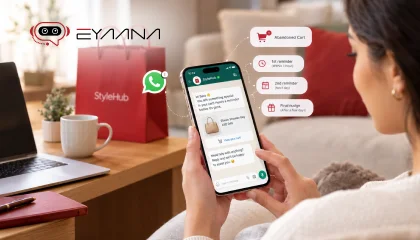
Recovering even a modest share of those carts can add meaningful revenue without buying a single new visitor. Email has long been the default recovery channel, but in the GCC, WhatsApp is where customers actually read and answer messages. Used carefully, it can be a far more effective way to bring shoppers back. Used carelessly, it can annoy people and put your number at risk.
Start with permission
Recovery messages should only go to customers who have agreed to receive them. Capture opt-in clearly at checkout or account creation, explain what messages to expect, and make it easy to opt out. Respecting consent protects customer trust and the quality rating of your WhatsApp number. Check the current WhatsApp Business policies and applicable regulations for your markets, as the rules and pricing evolve.
Because abandoned-cart messages are usually sent outside an active conversation, they typically rely on pre-approved message templates. Plan and submit them early, since approval takes time.
Timing: sooner than you think, but not too soon
The first reminder. A short gap after abandonment, often within an hour or so, catches shoppers while intent is still fresh. Sending instantly can feel intrusive, as the customer may still be browsing.
The second reminder. A follow-up the next day, with a different angle, such as a reminder that stock is limited or a helpful answer to a likely objection.
The final nudge. A last message a few days later, perhaps with a small incentive if margin allows, then stop. Repeated messages after that harm the relationship.
Test the intervals for your category. Fashion, electronics and groceries all behave differently, and the best timing comes from your own data, not from a general rule.
Tone: helpful, not pushy
Sound like a person. A friendly, conversational message performs better than a corporate notice. Use the customer's name and refer to the specific product.
Keep it short. A product name, a photo if the template allows, and a clear link back to the basket.
Offer help, not pressure. "Need a hand choosing a size?" invites a reply and treats the customer as someone worth assisting.
Be honest about urgency. Only mention limited stock if it is true. False scarcity erodes trust quickly.
Respect the language. Send the message in the language the customer used when they shopped, and make sure Arabic templates are written naturally rather than translated word for word.
Make it a conversation, not a broadcast
The real advantage of WhatsApp is that customers can reply. A shopper who asks about delivery time, sizing or payment options should get an answer straight away, ideally from an AI agent that can handle common questions and pass anything complex to a person. This turns a reminder into a sales conversation, and it often resolves the real reason the cart was abandoned.
Common objections worth preparing for include delivery charges, delivery times, cash on delivery, returns policy, payment security and product availability. If your agent can answer these in seconds, many carts recover without any discount at all.
Use incentives sparingly
Discounts can lift recovery rates, but they also train customers to abandon baskets in the hope of a code. Keep incentives for later reminders or for specific segments, such as first-time shoppers or high-value baskets. Free delivery is often a cheaper and more attractive offer than a percentage off.
Measure what matters
Track recovery rate, revenue recovered, opt-out rate, reply rate, and the net effect compared with a holdout group that received no message. If opt-outs climb or your number's quality rating drops, scale back. Review conversations to find the objections that come up most, and fix them on the site itself.
Why choose Eyaana
Eyaana's WhatsApp automation triggers recovery messages from your store's cart events, uses approved templates in Arabic and English, and answers customer replies instantly with an AI agent that hands off to a human when needed. Opt-outs are respected automatically, and reporting shows recovered revenue against a holdout, so you can see what the channel really adds.
Eyaana is an AI customer support platform built to turn abandoned carts into conversations that end in an order.