
AI phone calls for lead follow-up: what actually makes a synthetic voice call convert instead of getting hung up on
An AI phone call that sounds robotic gets hung up on in the first ten seconds — and that failure teaches a business the wrong lesson. The lesson usually drawn is "customers don't want to talk to AI."
An AI phone call that sounds
robotic gets hung up on in the first ten seconds — and that failure teaches a
business the wrong lesson. The lesson usually drawn is "customers don't
want to talk to AI." The more accurate lesson is usually "that
specific call was badly built." The gap between an AI call that converts a
lead and one that gets an immediate hang-up has very little to do with whether
the voice sounds synthetic, and a lot to do with a handful of specific design
decisions most implementations get wrong.
Why "does it sound human" is the wrong first question
Voice quality matters, but it's
not where most AI call failures actually happen. A call can use a highly
natural-sounding voice and still fail, because the failure is in the
conversation design, not the audio: the call opens with too much information
before establishing why it's calling, it can't handle a simple interruption or
a "wait, who is this?" gracefully, or it barrels forward with a
script regardless of what the person on the other end just said. Customers hang
up on calls that feel scripted and unresponsive far more readily than they hang
up on calls that simply sound synthetic but respond naturally to what they say.
What actually drives conversion
A clear, immediate reason
for the call. The first five seconds need to establish who's calling, why,
and what's in it for the person picking up — not a long-winded introduction
before getting to the point. Leads who submitted an enquiry expect a fast,
relevant follow-up; a call that opens vaguely reads as a sales call to be
avoided, even when it's answering their own request.
Genuine handling of
interruption and off-script responses. Real conversations don't follow a
script. A caller who says "actually, I already found what I needed"
or asks an unexpected question needs the AI to actually process that and
respond appropriately — not plough through a predetermined script regardless of
what was just said. This is the single clearest tell between an AI call that
feels like a conversation and one that feels like an IVR menu with a voice
attached.
Speed of response, not just
quality of response. Human conversation has a rhythm, and AI voice systems
that introduce a noticeable lag before responding — even a second or two —
break that rhythm in a way people notice immediately, even if they can't
articulate why the call feels "off." Latency is as much a conversion
factor as what's actually said.
Knowing when to stop being a
script and hand off. The calls that convert best aren't the ones that push
hardest through every objection — they're the ones that recognise a genuine
buying signal or a genuine objection requiring judgment, and either book the
next concrete step (a callback, an appointment, a human specialist) or
gracefully exit rather than over-staying the call's welcome.
Timing relative to the
lead's action. An AI follow-up call placed within minutes of a lead
submitting an enquiry converts meaningfully better than the same call placed
the next day — not because the script is different, but because the lead's
intent is still warm. This is where AI calling genuinely outperforms human
follow-up in practice: consistency and speed at the moment intent is highest,
every time, without depending on which sales rep happened to be free.
What good call analytics actually reveal
The calls that fail usually
cluster around identifiable, fixable moments — a specific point in the script
where hang-ups spike, a particular type of objection the AI handles poorly, a
call length threshold beyond which conversion drops sharply. Reviewing call
analytics isn't just a reporting exercise; it's the mechanism for iterating a
script from "technically functional" to "actually
converts," the same way a sales team would coach and refine a human
caller's approach over time.
Why choose Eyaana
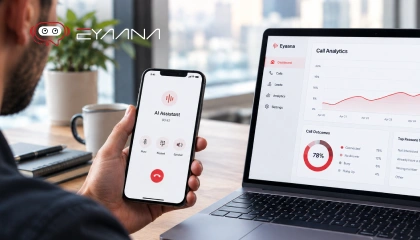
Eyaana's AI phone calls are built for exactly this: natural, responsive conversation that handles interruption and off-script questions rather than reciting a fixed script, triggered the moment a lead comes in so follow-up happens while intent is still warm. Call analytics surface where conversations succeed or stall, so the script keeps improving — and every call hands off cleanly to a human agent the moment a conversation genuinely needs one.